
Barts Health patients set to benefit from new life-extending drug for ovarian cancer
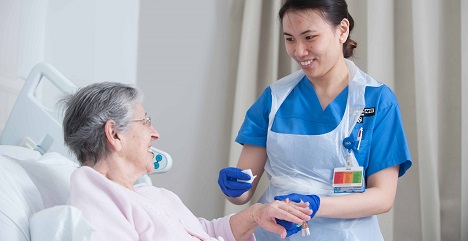
A new drug that extends survival for women with hard-to-treat ovarian cancer is now available on the NHS. The treatment was tested at St Bartholomew's Hospital as part of a major global clinical trial including eight NHS hospitals in England.
Ovarian cancer is one of the leading causes of death from gynaecological cancer worldwide. While surgery and chemotherapy are the standard initial treatments, around 80% of patients with advanced ovarian cancer will relapse, and most will eventually develop resistance to chemotherapy. Until now, there had been no new NHS treatment option for this group for over 20 years.
The new drug, mirvetuximab soravtansine (Elahere), will be offered to patients whose ovarian cancer has stopped responding to standard platinum-based chemotherapy, and whose tumours carry a protein called folate receptor alpha (FRα). NHS England estimates up to 400 patients a year in England could benefit.
What did the MIRASOL trial show?
In the MIRASOL global clinical trial, patients receiving mirvetuximab soravtansine lived an average of 16.5 months, compared with 12.8 months for those on chemotherapy. More than a third of patients (37%) saw their tumours shrink by at least 30%, compared with 16% on chemotherapy. The treatment is given as a drip over two to four hours, once every three weeks.
Patricia Hill, 64, a retired NHS physiotherapist from north London who spent six years working in cancer care, was diagnosed with ovarian cancer in 2023. She began treatment with mirvetuximab soravtansine in January 2026.
Previously, I've had three different lines of chemotherapy, and this is the first time that I've actually been able to get on with my life in terms of the impact of side effects. It actually adds life to years, rather than spending your life in bed recovering from the side effects of chemotherapy.

Dr Shanthini Crusz (pictured), consultant medical oncologist and lead for acute oncology services at Barts Health, led the study at the Trust.
Women with advanced ovarian cancer have historically had very limited treatment options, so we are delighted that the drug is now available on the NHS. The MIRASOL trial showed it improves overall survival, and my patients at Barts Health tolerated it well. I am proud that our team contributed to bringing this treatment into standard NHS care.
Dr Rowan Miller, consultant medical oncologist who works jointly across University College London Hospital (UCLH) and Barts Health, led the trial at UCLH.
Finally, there is a drug that is available that improves survival for this group of patients and, in addition, the patients get on with the treatment well and find it easier to manage than standard chemotherapy.
Availability of the treatment
Following a recommendation by the National Institute for Health and Care Excellence (NICE) on 4 June 2026, the treatment is now available. Patients will be referred to hospitals that provide specialist anti-cancer therapy for gynaecological cancers. A tumour test to confirm the presence of the FRα protein is required before starting treatment.
Find out more about cancer services at Barts Health NHS Trust, including gynaecological oncology, at bartshealth.nhs.uk/cancer-services. If you have questions about ovarian cancer treatment, please speak to your clinical team. For wider information and support, visit Ovacome, the UK's ovarian cancer charity.