


Join us for musical performances
Join us for musical performances
Thanks to one of our hospital charities, Friends of The Royal London Hospital, each week we are treated to musical performances from volunteer musicians and singers.
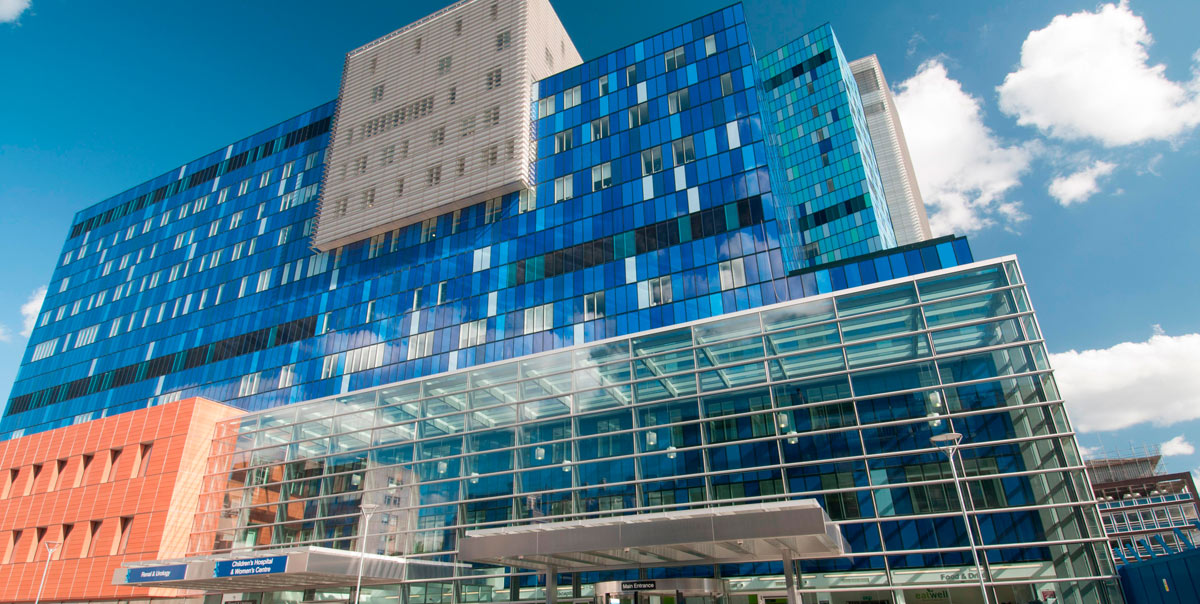
We are an internationally renowned teaching hospital.
Our hospital is home to one of the largest children's hospitals in the UK and London's Air Ambulance
We are one of London's leading trauma and emergency care centres and hyper-acute stroke centres.
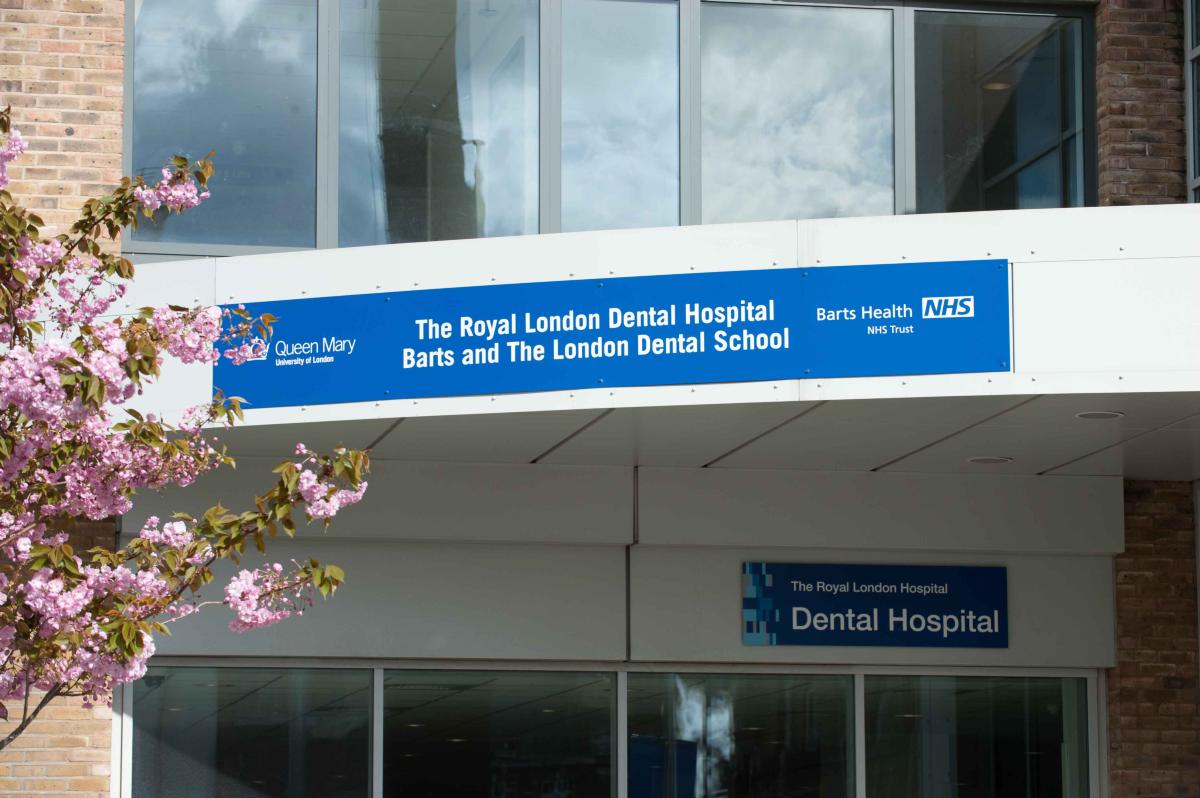
The Royal London Dental Hospital is a leading specialist hospital for dental and oral health.
Small actions can have a lasting impact.
Explore our four short films and discover how everyday kindness, empathy and respect can help create a safer, more inclusive workplace for colleagues, patients and partners.
We are here for you
Tel: 020 7377 7000
The Royal London Hospital is located in Whitechapel in east London, within the London Borough of Tower Hamlets. You can travel to hospital in a number of ways including on foot, by car, by bike or by public transport. Plan your journey using the Transport for London journey planner or through the travel information below.
TfL can offer advice on planning a journey using an accessible route and can provide a mentor to come with you for your first few journeys to help you gain confidence and become an independent traveller, to find out more complete TfL’s form online.
The following buses stop outside or close to The Royal London Hospital, 25 (24 hour service), 106, 205 and 254 on Whitechapel Road as well as night buses N205 and N253, the D3 on New Road, 15, 115 and 135 as well as night buses N15 and N550 on Commercial Road. Low-floor wheelchair accessible buses run on all routes serving The Royal London Hospital.
The closest underground station is Whitechapel a 6 minute walk from The Royal London Hospital, which is served by Hammersmith and City line, District line, Elizabeth line, as well as the London Overground.
Liverpool Street is the nearest National Rail station a 29 minute walk away. Alternatively you can take the Hammersmith and City line from Whitechapel to Liverpool Street Station.
To find out more about the above listed Freedom passes visit the London Councils website.
There is no public parking at the hospital itself so we encourage patients and visitors not to travel by car wherever this is possible. If you do need to drive there is limited metered/phone parking available on streets around The Royal London Hospital. Meters can be found on Turner Street, Ashfield Street, Varden Street and Cavell Street where you can stay for a maximum of 4 hours at a charge of £3.80 per hour.
If you need to be dropped off or picked up, The Royal London Hospital operates a one-way system along Stepney Way road and allows for drop off and pick up in designated laybys, with a maximum stay of 10-minutes.
Infopoint help-points allow you to make free calls to taxi companies and public transport information lines to arrange your journey home. There are infopoints located at the main entrance of the Royal London Hospital, Stepney Way entrance, Dental Hospital entrance, A&E entrance, Women's and Children's entrance, Children's A&E entrance and Luckes entrance.
There are a small number of parking bays for drivers with Blue Badges, these are accessed via Raven Row. Drivers who are registered disabled and have a blue badge can also check where to park at on the Tower Hamlets website.
The Royal London hospital is situated just outside the congestion charging zone. If you need to drive through the zone to get to hospital, you are required to pay the charge, although there are some exemptions and discounts. These include:
those with disabilities who hold a blue badge
residents living within the congestion charging zone
drivers of alternative fuel vehicles
A full list of categories of drivers/vehicles eligible for exemptions and details of how to pay the charge can be found on the Transport for London congestion charging website. To qualify for an exemption or discount you must register with Transport for London.
You may be able to claim a refund for the cost of your transport to hospital through the Healthcare Travel Costs Scheme (HTCS) if you:
are not eligible for patient transport services (PTS)
cannot afford the cost of travelling to hospital
cannot get a friend or relative to take you
Refer to Healthcare Travel Costs Scheme (HTCS) for more information on who is eligible, what the conditions are and how you can access the scheme.
We encourage visitors, staff and patients living nearby to cycle to the hospital if possible. Cycle parking facilities are available around the hospital.
Santander cycle hire docking stations are available to hire and dock bikes near to the Royal London Hospital at:
Royal London Hospital, Whitechapel (on Whitechapel road closest to the main entrance to the hospital)
New Road 1, Whitechapel (closest to the Royal London Dental Hospital)
We welcome visitors to The Royal London Hospital. Before you arrive, please familiarise yourself with our visiting guidance.
Our AccessAble guides and routes
Information in Bengali
Information in Somali
Information in English
If you need to contact a patient in the department, please call 020 3377 7000 and ask for the adult emergency department. To help us locate the patient, please have their full name and date of birth available.
If you have a relative/ loved one on our ITU wards (the 4th and 15th floor), the phone number is 07710 066 906. They may be busy with patients/ relatives or have poor signal so please do text them and they will contact you as soon as they can. Their operating hours are largely 9-5pm or sometimes 10-7pm if they are supporting families who need out of office hours support.
If something is urgent or life-threatening, the patient's designated contact person will receive a call from the hospital.
If you need urgent help, please call the ward/department and ask to speak to the Nurse in Charge. If you need further support, call switchboard on 0207 377 7000 and ask for help from the Site Manager.
If the person is unconscious or is unable to update their designated contact person, the designated contact person will receive a call from the hospital.
Calls to the designated contact person from the hospital will usually happen from 2pm, or whenever ward rounds finish each day but may be as late as 7pm depending on how sick the patient is. Most wards will provide updates from the doctor and/or nurses every 48 hours, unless a patient’s condition significantly changes
To increase your chance of your call being answered, please call between the hours of 2-6pm and after 8pm. However please remember that patient care will always be prioritised over answering the phone if the ward has a high number of sick patients.
Our adult emergency department (ED) is open 24 hours a day, 365 days a year. We provide emergency care for patients aged 18 and over, and support admissions to adult wards when needed.
The Royal London Hospital is the Major Trauma Centre for north east London and Essex and provides specialist emergency care, including stroke services and access to a wide range of medical and surgical specialties.
Our multidisciplinary team includes doctors, nurses, advanced clinical practitioners, physician associates and support staff. We also work closely with the East London NHS Foundation Trust Mental Health Liaison Team to support patients experiencing mental health crises.
Staff wear colour-coded uniforms to help patients identify their role and level of seniority. Doctors wear light blue, aqua blue or navy blue scrubs, while nursing staff wear different uniform colours according to their role.
We have dedicated emergency imaging facilities, including X-ray and CT scanning services available within the department.
When you arrive at the emergency department, please check in at the reception desk near the main entrance.
After registering, you will be assessed by a triage (streaming) nurse, who will direct you to the most appropriate service for your needs. Depending on your condition, this may be the emergency department, the urgent treatment centre (UTC), or the GP hub.
Early Senior Assessment (Zone D)
Most patients will first be seen by a senior clinician in an area called Early Senior Assessment (Zone D). This brief assessment helps identify any immediate clinical needs and whether any investigations are required, such as:
After your initial assessment, there may be a wait while investigations are completed and results become available. During this time, you will usually be asked to wait in the main waiting room.
Once your results are available, you will have a more detailed consultation. This may include reviewing your test results, a clinical examination if needed, and discussing your diagnosis and treatment plan.
Following this assessment, you will either:
If, at any stage, you become more unwell or require immediate treatment, you may be moved to another clinical area based on your condition. These areas include:
Your care will always be prioritised according to clinical need.
Waiting times can vary depending on the severity of patients' conditions, the number of people attending the department and the specialist services required.
Patients with the most serious or life-threatening conditions are treated first. Our teams work hard to assess, treat and discharge patients as quickly and safely as possible.
Some patients may be referred to Emergency Department Same Day Emergency Care (EDSDEC) or Specialty Same Day Emergency Care (Specialty SDEC). These services provide rapid assessment, investigation and treatment for patients who can often be managed without needing to stay for a longer review or overnight in hospital. If you are suitable for one of these services, a member of staff will explain the process and direct you to the appropriate area.
Visiting the adult emergency department [add to exiting visiting tab on page]
To help us provide safe care and manage space within the department, we ask that patients are accompanied by no more than one relative, friend or carer wherever possible.
Exceptions are made for:
We understand that the emergency department can be a busy, noisy and sometimes overwhelming environment. This can be particularly challenging for people with additional needs, including learning disabilities, autism, dementia or other cognitive impairments.
Please tell a member of staff about any additional needs as soon as possible, including at reception, during your initial assessment, or when you arrive in a clinical area. If you have a hospital passport, please share this with staff to help us provide the best possible care.
Where possible, we will try to accommodate patients in areas with reduced noise and stimulation. However, this may not always be immediately available during particularly busy periods.
If you have any dietary requirements and are likely to remain in the department for more than four hours, please let a member of staff know.
Further information for adults with learning disabilities and their carers can be found on our accessibility page.
For information on how to contact a patient in the adult emergency department, please see the tab above called 'contacting a loved one'.
For information on facilities in the adult emergency department, please see the tab below called 'our facilities'.
More information about our accident and emergency departments.
|
Ward |
Phone number |
|---|---|
|
D - Clinical Decision Unit (CDU) |
020 3594 0048 |
|
3D - Short Stay Surgery (ACAD) |
020 3594 0227 |
|
3E - Surgical admissions |
020 3594 2195 |
|
3F - High Dependency Surgery (HDU) |
020 3594 2215 |
|
4E/F - Adult Critical Care Unit (ACCU) |
020 3594 0420 |
|
6C - Paediatric Critical Care Unit (PCCU) |
020 3594 0382/0383 |
|
6E/F - Delivery Suite |
020 3594 2364/2365 |
|
7C - Paediatric Surgical |
020 3594 0720 |
|
7D - Paediatric Assesment and Short Stay Unit (PASSU) |
020 3594 0443 |
|
7E - A-side Respiratory Paediatrics and General Paediatrics |
020 3594 2421 |
|
7E – B-side Haematology Oncology and General Paediatrics |
020 3594 2421 |
|
7F - Paediatric Gastroenterology |
0203 594 2447 |
|
8B - Lotus Birth Centre |
020 3594 1561 |
|
8C - Gynaecological |
020 3594 1561 |
|
8D - Neonatal Unit |
020 3594 0524 |
|
8F - Maternity Inpatients |
020 3594 2505 |
|
9E - Renal and Urology Inpatients |
020 3594 2612/3 |
|
Renal High Dependency Unit (HDU) |
020 3594 2653 |
|
9F - Renal and Urology Inpatients |
020 3594 2637/8 |
|
10E - Vascular |
020 3594 2696 |
|
10F - Orthopaedic |
020 3594 2716 |
|
11C - Stroke Unit |
020 3594 0614 |
|
11E - Acute Admissions Unit (AAU) |
020 3594 1111/2809 |
|
11F - Acute Admissions Unit (AAU) |
020 3594 2825/2826 |
|
12C - Emergency Orthopaedic Surgery and Plastics |
020 3594 1210/0683 |
|
12D - Trauma |
020 3594 0718 |
|
12E - Neurosciences, ENT and OMFS |
020 3594 2862/3 |
|
12F - Neurosciences, ENT and OMFS |
020 3594 2847/8 |
|
13C - Medical Ward |
020 3594 1310/0741 |
|
13D - Medical and Haematology |
020 3594 1320/0769 |
|
13E - Cardiac and Respiratory Medicine |
020 3594 2881/2879 |
|
13F - Infection, Regional HIV and Respiratory Medicine |
020 3594 2901/2906 |
|
14E - Elderly Care |
020 3594 2918 |
|
14F - Older people's services (Elsie Gilding Unit) |
020 3594 2936/7 |
Accessible toilets are available throughout the adult emergency department. If you are in the main waiting area, accessible toilets can be found in Zone D.
A vending machine is available in the main waiting room.
Patients being treated in the department are offered hot and cold drinks. For patients who remain in the department for more than four hours, sandwiches and snacks are available. Patients waiting more than eight hours for admission to a ward are provided with hot meals at mealtimes.
Patients staying in the Same Day Emergency Care (SDEC) unit are provided with hot meals and snacks during their stay, in line with other ward areas across the hospital.
We can offer overnight accommodation for the relatives of patients being admitted to the hospital or for patients who attend the hospital for regular treatment. We can also provide facilities for patients prior to their appointment who have to travel a long way to attend the hospital for complex investigations or treatment, but who do not need to be readmitted to a ward. Please ask the ward staff or pre-admission staff to see if this accommodation would be suitable for you, or your relatives, at any stage of your treatment.
Stevenson House on Ashfield Street is available for the families of children admitted to The Royal London for long stays. It is a 16 bedded house and includes two fully-equipped kitchens, 10 bathrooms, a large shared living room, a playroom and laundry facilities. Direct phone lines connect the wards to family bedrooms. The Sick Children's Trust provides the 'Home from Home' accommodation in Stevenson House, they are a voluntary organisation that do not charge for the stay and rely entirely on donations.
Enquiries should be made via the house manager on telephone 020 7791 2604.
If you, a friend or a family member are well enough to go home, hospital stays may finish in our discharge lounge. The lounge is a relaxing and calm space to wait for transport or medications to take home.
At the discharge lounge we:
Please speak to the nurse in charge if you have any questions.
Chaplains of many faiths are available to speak to all patients, relatives and carers. The chaplaincy team welcomes everyone, whatever your faith or beliefs and whether or not you follow a religion. Information about your religious preference will be passed to the chaplaincy. If you do not wish this to happen, please inform a member of staff.
There are payphones and direct lines to taxi companies on the ground floor of the main hospital building at the Whitechapel entrance.
There is a kiosk selling hot and cold beverages, fruit and snacks in the Stepney Way atrium which is open 8am to 3pm Monday to Friday.
The staff, patient and visitor restaurant is located on the fifth floor of the main building. It is open daily 7.30am to 7pm, including weekends and bank holidays. With impressive views of the surrounding area, the restaurant has 180 seats and serves a varied menu to cater for a range of diets. A selection of hot and cold foods are available in the restaurant.
In the restaurant is a vending machine and water dispenser which are accessible 24 hours a day throughout the week. Find out about disabled access to the restaurant.
Costa Coffee has two cafes on site, one located in the dental hospital on Turner Street and the other at the Whitechapel entrance to the main hospital building.
There is a cash point on the wall of the medical college student union building, opposite the outpatients department in Stepney Way.
A cashier’s office is available on the second floor of the main hospital building, outside of the fracture clinic.
Public male, female and disabled toilets are accessible on all floors of the hospital outside of wards.
Free wifi is available throughout the hospital for patients. There’s no time limit on use, and capacity has been expanded in order to ensure continuous access for as many users as possible.
Please note that the wifi cannot support streaming movies or high-intensity computer games.
The wifi can be accessed by completing the following steps:
Barts Hospital Radio is free and provides programs of entertainment, music, and news: 24 hours a day, seven days a week.













But we will not tolerate violence and abuse
We understand that being in hospital can be stressful, and our staff are here to ensure you or your loved ones receive the best possible care.
We’re training our teams to recognise warning signs and defuse situations early, but violence and abuse will not be tolerated. Emergencies will always be treated, but any violent incidents may be noted on your record.
Some staff may wear body-worn cameras to help protect everyone. These are only switched on during an incident, and you’ll always be told before recording starts.
Footage is stored securely under the Data Protection Act. If you have any questions, please read our violence and abuse policy., speak to the nurse in charge or a member of the security team.
We understand that speaking with your treating team may feel overwhelming, especially when there is a lot of information to take in. This is why you may record your consultation or treatment for your private use.
However, please speak to your clinician before you start recording so they can provide consent and ensure that the recording does not interfere with your treatment. Your clinician may make a note in your health record stating that you have recorded the consultation or care being provided.
You may not take photos in clinical areas or disclose or publicise a photo, video, or audio recording if it has been modified and is not in connection to your consultation.
You can read more here.

Barts Health has been recognised across eight specialties in a global ranking of the world's leading hospitals.…

Find out more about how the maternity team at the Royal London Hospital are using a new device which is a safer alternative to forceps during births.…

Our youngest patients and their families enjoyed a packed afternoon of entertainment to celebrate one year since Dilly's Den was opened.…

Congratulations to Kirsty Stewart, paediatric consultant who is May's Hero of the Month for her exceptional care. …

We understand that having a child in the Paediatric Critical Care Unit (PCCU) can be an extremely challenging time for parents. A recent study identified that some of the highest causes of …
Join us for musical performances
Thanks to one of our hospital charities, Friends of The Royal London Hospital, each week we are treated to musical performances from volunteer musicians and singers.
And support our hospitals
Barts Charity invests in inspiring people, healthcare projects and ground-breaking research, driven by one uniting goal: to transform the health of our east London community.